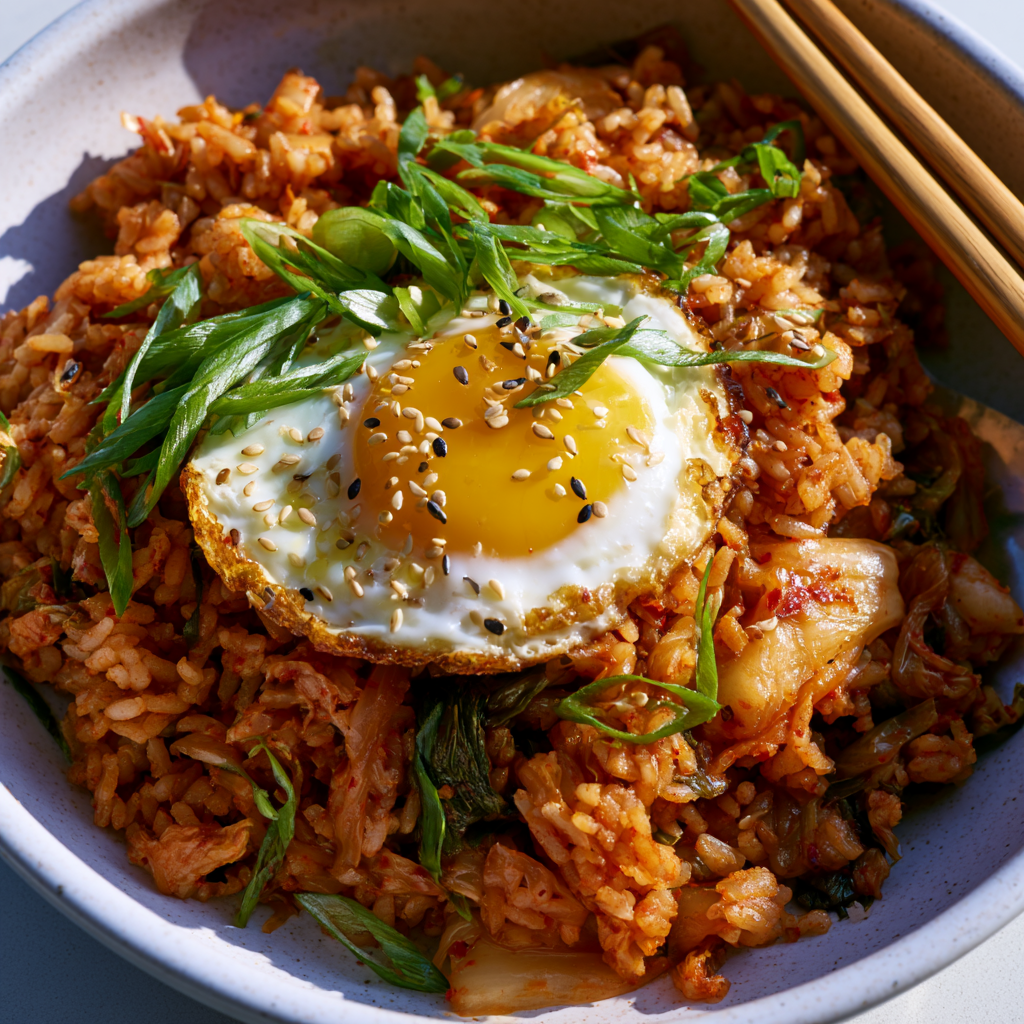
Turn simple leftover rice into an incredibly flavorful meal with this easy Kimchi Fried Rice! Known as kimchi bokkeumbap, this Korean-inspired dish combines fluffy rice with tangy fermented kimchi, savory seasonings, vegetables, and a touch of sesame oil. It comes together quickly in one pan, making it perfect for busy weeknights, quick lunches, or whenever you’re craving something spicy and satisfying.
Kimchi fried rice has become one of those meals my little family always gets excited about. Whenever I have leftover rice in the refrigerator, my husband already knows what’s coming—and somehow, he always finds his way into the kitchen while I’m cooking!
The sizzling sound of rice hitting the hot pan, combined with the spicy, tangy aroma of kimchi, makes the whole kitchen smell amazing. I love how easily this recipe transforms everyday ingredients into something that feels like a restaurant-style meal. Sometimes we enjoy it with a fried egg on top, and those golden, runny yolks make the dish even more delicious.
Why This Kimchi Fried Rice Is So Good
- Bold Korean-inspired flavor: Tangy kimchi, savory soy sauce, garlic, and sesame oil create an irresistible combination.
- Perfect for leftovers: Day-old rice works beautifully and helps create that classic fried-rice texture.
- Quick and easy: This flavorful meal can be on the table in around 20 minutes.
- Customizable: Add vegetables, tofu, chicken, beef, or another protein to make it your own.
- Spicy and satisfying: Kimchi provides a wonderful kick while adding plenty of savory depth.
- Fried egg topping: A soft, crispy-edged fried egg adds richness and makes the dish extra comforting.
Ingredients
Serves 4
- 4 cups (800 g) cooked, chilled white rice
- 10 oz (280 g) kimchi, roughly chopped
- 1 small yellow onion, finely diced — about 4 oz (115 g)
- 3 green onions, sliced — about 2 oz (55 g)
- 3 garlic cloves, finely minced — about 0.4 oz (12 g)
- 2 tbsp (30 g) gochujang
- 1 1/2 tbsp (22 ml) soy sauce
- 1 tbsp (15 ml) toasted sesame oil
- 1 tbsp (15 ml) neutral cooking oil
- 1 tsp (5 g) sugar, optional
- 1/2 tsp (2 g) freshly ground black pepper
- 1 tbsp (8 g) toasted sesame seeds
For serving:
- 4 large eggs
- Extra sliced green onions
- Additional sesame seeds
- Kimchi, optional
Directions
- Prepare the rice: Break up any large clumps in the chilled rice using your hands or a fork. Cold, day-old rice is ideal because it is less moist and fries more easily.
- Cook the aromatics: Heat the cooking oil in a large skillet or wok over medium-high heat. Add the diced onion and cook for 2–3 minutes until it begins to soften.
- Add the garlic and kimchi: Stir in the minced garlic and chopped kimchi. Cook for approximately 3–4 minutes, stirring frequently, until the kimchi becomes fragrant and slightly caramelized.
- Build the flavor: Add the gochujang, soy sauce, sugar if using, and black pepper. Stir everything together until the kimchi is evenly coated and the sauce becomes fragrant.
- Add the rice: Tip the chilled rice into the pan. Use your spatula to break apart the rice while tossing it with the kimchi mixture. Continue stir-frying for about 4–6 minutes, until the rice is hot and evenly coated.
- Finish with sesame oil: Drizzle the toasted sesame oil over the fried rice and toss everything together. Taste and adjust the soy sauce or gochujang according to your preference.
- Add the green onions: Stir in most of the sliced green onions, reserving some for garnish.
- Fry the eggs: In a separate skillet, cook the eggs to your preferred doneness. For an especially delicious result, fry them until the edges are crisp while keeping the yolks slightly runny.
- Serve: Divide the kimchi fried rice between bowls and top each serving with a fried egg. Sprinkle with sesame seeds and the remaining green onions. Serve immediately.
Notes
- Use cold rice: Freshly cooked rice can become soft and sticky when fried. Chilled leftover rice gives you much better texture.
- Choose your kimchi: Older, well-fermented kimchi generally gives the dish a stronger and more complex flavor.
- Adjust the spice: Reduce the gochujang for a milder version or add extra for more heat.
- Add protein: Cooked chicken, beef, shrimp, tofu, or crispy bacon can turn this into an even heartier meal.
- Add vegetables: Diced carrots, peas, mushrooms, corn, or spinach are easy additions.
- Vegan option: Leave out the egg and make sure your kimchi and gochujang are vegan-friendly.
- Soy sauce substitute: Tamari can be used instead of soy sauce for a gluten-free option, provided the other ingredients are also gluten-free.
- Best topping: A fried egg with crispy edges and a soft yolk adds a delicious creamy contrast to the spicy rice.
- Storage: Keep leftovers refrigerated in an airtight container and consume within 3–4 days. Reheat thoroughly before serving.
- Nutrition: Nutritional values vary depending on the kimchi, rice, sauces, and toppings used. Adding an egg or protein will increase the protein content of the meal.